Brandon Furr’s Path to the Front of the School
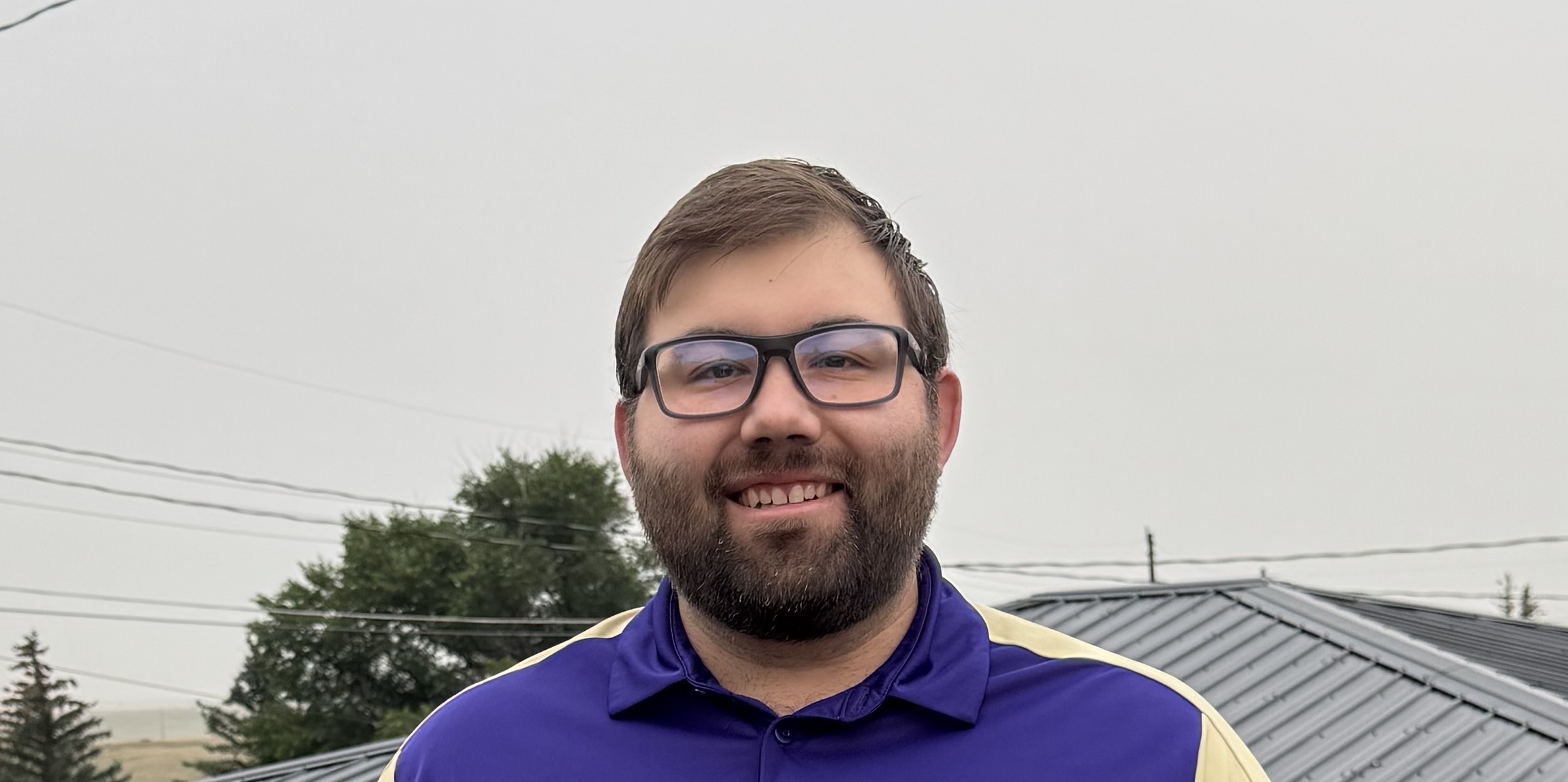
Brandon Furr didn’t become the principal by a direct route. He came by way of grief, false starts, financial pressure and, eventually, a belief that schools matter most when they are built around presence. Now the middle school principal at Cut Bank Middle School in Cut Bank, Montana, Furr has made a career out of being the leader who shows up early, walks the halls, and tries to make the work easier for everyone else.
Born and raised in Shelby, Montana, Furr said his path changed sharply during his senior year of high school when his father died after a long battle with cancer. He went to Montana State University-Northern intending to become a physical education teacher, but returned home where he worked at Town Pump. He later moved to Missoula to be closer to friends, and spent the next several years changing direction more than once.
After arriving in Missoula, he enrolled in the University of Montana and debated between elementary education and journalism. Unable to decide, he left UM and started working. The moment that pushed him to commit to his studies came not in a classroom but at Walgreens on Reserve Street in Missoula. After being called to clean up a grotesque mess, he realized he did not want that to be his life’s work. As he thought back on past jobs, he kept returning to his time working as a substitute in Shelby Public Schools.
“Those instances are what made me decide it’s time,” he said. “I gotta lock in.”
He came back to the University of Montana’s Phyllis J. Washington College of Education. Early on, the adjustment was hard. By the time he got to Missoula, many of his friends were already sophomores or juniors, and he was still in freshman-level courses. But being involved changed everything. He worked for UM campus recreation youth camps for three summers, officiated intramurals and found a community through work as much as through classes.
“That really expanded the friend group,” he said of the youth camps.
He remembers the University as the place where he built some of the strongest relationships in his life. He almost never missed a Griz football game, participated in intramurals and found in the education cohort a ready-made network of peers.
After six-and-a-half years of balancing school and work, Furr graduated in 2020. It was, by his own account, a nontraditional route, but one that shaped him in significant ways. “It was important to be open to any opportunity,” he said. Many of the relationships and jobs he values now grew from saying yes to things that initially seemed peripheral. He also notes, with some irony, that the time it took him to finish school is part of why he met his wife, who was in the same cohort.
Furr’s transition from student to teacher happened in the turbulent times of the COVID-19 pandemic. He was student teaching at Frenchtown Middle School when the shutdown arrived, and the University gave schools the option of ending student teaching early or continuing virtually. Frenchtown urged him to stay. From his apartment, he taught English and history online, a surreal and compressed version of teacher training that nonetheless gave him experience he would use later.
When the pandemic scrambled hiring, Furr and his wife were determined to stay in Montana. Cut Bank offered openings and they applied. What began as a plan to stay a year or two became something else. They bought a house, settled in, and discovered that Cut Bank suited them more than they had expected.
“We ended up liking it a lot,” he said.
Looking to advance his career in education, Furr earned a master’s in science education from MSU, then returned to UM for an Education Leadership Certificate. He had long thought about becoming a principal, and over time the appeal became clearer: leadership, yes, but also advocacy.
“I wanted to help the teachers,” he said. Teaching, in his view, has become harder and more stressful, and a principal’s job is to make the work more livable — to answer emails, cover lunch duty, walk the halls, and absorb some of the friction so teachers can focus on teaching. He tries to be in every classroom at least once a day, and preferably twice. When a student is sent to his office, he does not simply wave them back to class. He talks with them, documents the issue, and tries to make the next step more constructive.
Furr is candid about what rural education offers and what it demands. The upside, he said, is relationship-building: in a small town, you often know parents, grandparents, aunts and uncles, and sometimes several siblings across several years. The downside is the weight of small-town politics and the impossibility of keeping everyone happy. Still, he seems to find the scale manageable because the relationships are real and immediate.
He sees continuity as essential to a strong middle school, and he believes the culture he has tried to build — along with a good contract, a four-day week and decent pay — has helped people want to stay. Just as important are the smaller victories: students who start showing up, teachers who feel supported and a building that feels a little less strained.
Furr’s style is practical, but it has a clear philosophy underneath it. He wants to reduce the burden on the adults in the building, make school feel steadier for students and remain visible enough that people know where to find him. He understands that many people assume principals sit in offices and discipline kids all day. In his experience, the job is closer to triage, mediation and morale management.
That attitude may be rooted in his own history. He remembers teachers who gave him grace when his father was sick, including a biology teacher who offered him an alternate assignment when a lesson turned to cancer cells. He remembers a principal who kept him in school when he might otherwise have gone another way. Those experiences shaped his idea of leadership: not punishment first but understanding first.
With the new school year underway, Furr says he is looking forward to meeting the school’s sixth-through-eighth-grade student body. As he gets to know the new students, his broader goal remains the same: improve the culture, challenge students academically and help them become good people.
“Every day is a new day,” he said. In Cut Bank, that seems to be a philosophy and a practice.