2026 Distinguished Alumni Award Recipient: Sara Scott
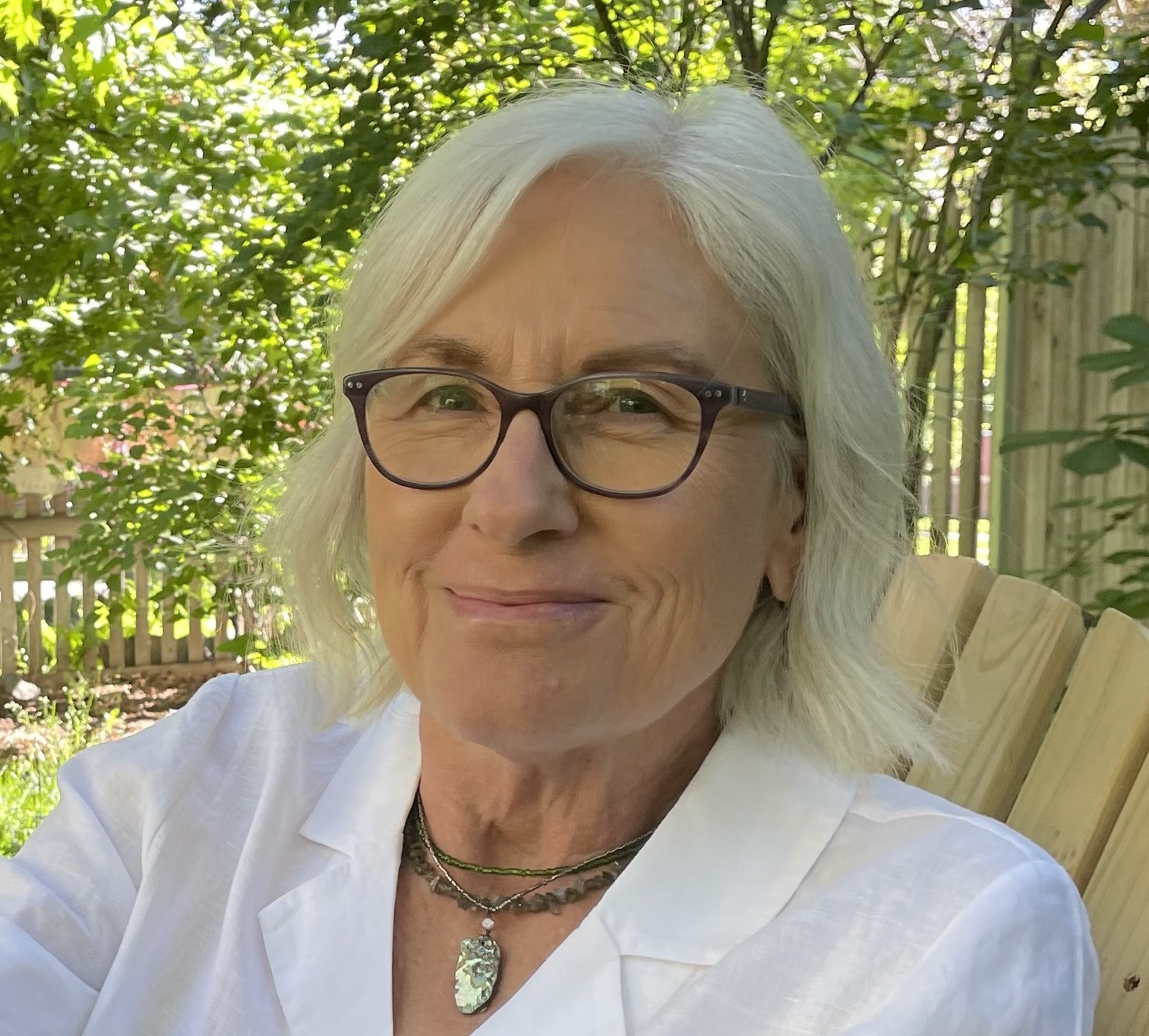
Dr. Sara Alicia Scott has spent more than four decades helping Montanans see what lies beneath the surface: the trails, campsites, rock art and artifacts that reveal how people moved through and adapted to this landscape for thousands of years. An accomplished archaeologist, interpreter and preservation advocate, she has built a career on the quiet, patient work of protecting cultural resources and bringing them to life for the public.
Scott didn’t arrive at the University of Montana expecting to become an anthropologist. She came in the early 1970s with a strong science background, taking classes in biology, botany and forestry and imagining a future rooted in the natural sciences. Then she encountered anthropology and something clicked. A new world could be found in each subfield of linguistics, physical anthropology, archaeology and cultural anthropology. An archaeology survey course with Professor Floyd Sharrock took her into the field at places like Gibson Reservoir and a site near the Missoula airport, where she helped excavate and survey Indigenous sites. Being in the farthest stretches of Montana looking for places where Native Tribes camped thousands of years ago captured her imagination and set her course.
Around the same time, a new federal requirement changed how public lands were managed. In 1971, President Nixon issued Executive Order 11593, directing federal agencies to consider impacts on archaeological and historic sites before undertaking projects. The U.S. Forest Service began hiring archaeologists to survey timber sales and road corridors to identify cabins, archaeological sites and other cultural resources. Scott, encouraged by Sharrock, joined one of those crews. It was demanding work: long days on mountaintops, off‑trail traverses in steep country, close encounters with bears and herds of elk. Those seasons, she recalls, “sealed the love that I have” for archaeology and the Montana landscape.
Scott earned her B.A. in Anthropology from the University of Montana in 1979 and later completed an M.S. in Anthropology at the University of Oregon in 1983, before returning to UM as a non‑traditional student to earn her Ph.D. in Anthropology in 2014. Her doctoral dissertation, “Ties That Bind on the Northwestern Plains: Contexts for Prehistoric Trade and Travel,” focused on Pictograph and Ghost Cave near Billings and examined ancient trail systems, trade routes and the movement of goods such as salmon, shells, bison hides and horn across the region.
Over the course of her career, Scott has worked in federal, state and private settings. Early roles included compliance and archaeological work for the Montana State Historic Preservation Office in Helena and field and consulting positions in Oregon with the Deschutes National Forest and CH2M Hill Engineering and Environmental Consultants, where she directed cultural resource programs across the western United States. She later returned to Montana, serving as an archaeologist and interpretive specialist for the Helena–Lewis & Clark National Forest and, from 2007 to 2019, as heritage program manager for Montana State Parks.
As heritage program manager, Scott launched the first comprehensive cultural resource program for Montana’s state parks, covering surveys, excavations, building rehabilitation, tribal consultation, collections care and training for staff and volunteer site stewards across 54 parks, including seven National Historic Landmarks and numerous National Register sites. She helped nominate First Peoples Buffalo Jump as a National Historic Landmark, secured a Save America’s Treasures grant for Bannack State Park and ensured that archaeological testing preceded foundation and restoration work at historic buildings—uncovering artifacts that challenged and enriched traditional narratives about places like Bannack.
Scott’s research on Pictograph Cave State Park is one of her most influential contributions. For decades, the site was assumed to be Paleoindian—10,000 years old or more—based on a handful of projectile points. Excavations in the 1930s and 1940s produced thousands of artifacts, many shellacked and stored for decades in UM collections without precise dating. For her Ph.D. work, Scott and collaborators cataloged the collection, modeled the excavation grid and selected perishable artifacts from the deepest levels for radiocarbon dating. The results showed that the primary occupations were about 5,000 years old and later, not Paleoindian, reshaping interpretations of the site’s chronology and significance.
Scott is also a leader in rock art research and preservation. She has coauthored studies on sites such as Bear Gulch, Atherton Canyon and the Hellgate pictographs, worked with specialized photographers and radiocarbon labs to document and date painted panels and helped craft conservation strategies for fragile images threatened by weathering and time. Her current work includes directing a multi‑year project on rock art sites in southwestern Montana, building detailed records of pictographs so future generations can study them even as the original paint fades.
Beyond research, Scott is recognized for her ability to stop bad ideas in their tracks. Generally, plans that could harm irreplaceable resources. She describes a chunk of her work as defending archaeological and historic sites from well‑meaning but misguided proposals and spending long hours at computers and in meetings to ensure that heritage resources remain intact. Her advocacy has extended to sensitive issues such as repatriation, where she helped identify secure, culturally appropriate burial areas at First Peoples Buffalo Jump and Pictograph Cave in collaboration with Crow, Blackfeet and other Indigenous communities.
Scott’s professional honors reflect both her scholarship and her public impact. She has received UM’s Raymond and Mina Keyser Ph.D. Scholarship in Anthropology and Bertha Morton Scholarship for her dissertation work, national awards for interpretation and government communications, and recognition as the Northern Region Forest Service Interpreter and Conservation Educator of the Year. She has authored or coauthored more than 20 articles in journals including Plains Anthropologist, Journal of California and Great Basin Anthropology, International Journal of Historic Archaeology and Archaeology in Montana, and she has contributed interpretive materials, curricula and web content for agencies and parks across the state.
Scott partnered with UM on field schools at sites like Madison Buffalo Jump, Rosebud Battlefield and Makoshika; supported student research and collections work; and has been mentored and supported by UM faculty such as Dr. Kelly Dixon. Her Griz family legacy includes her husband, Carl M. Davis (UM class of 1975), their children Madeline (UM class of 2013) and Spencer (UM class of 2014), and extended family members who also attended UM.
Now retired from state service but still highly active, Scott serves as executive editor of the journal Archaeology in Montana, where she has modernized the format, broadened the range of topics and helped increase student engagement and membership. She sits on boards and committees, including the University of Montana Museum of Arts and Culture Collections Advisory Committee, and continues fieldwork to document rock art sites. Her goal, she says, is to preserve portals into the past so that future generations can visit and experience ancient places that tell us, “who we are as a people.”