2026 Distinguished Alumni Award Recipient: James "Jim" Souza
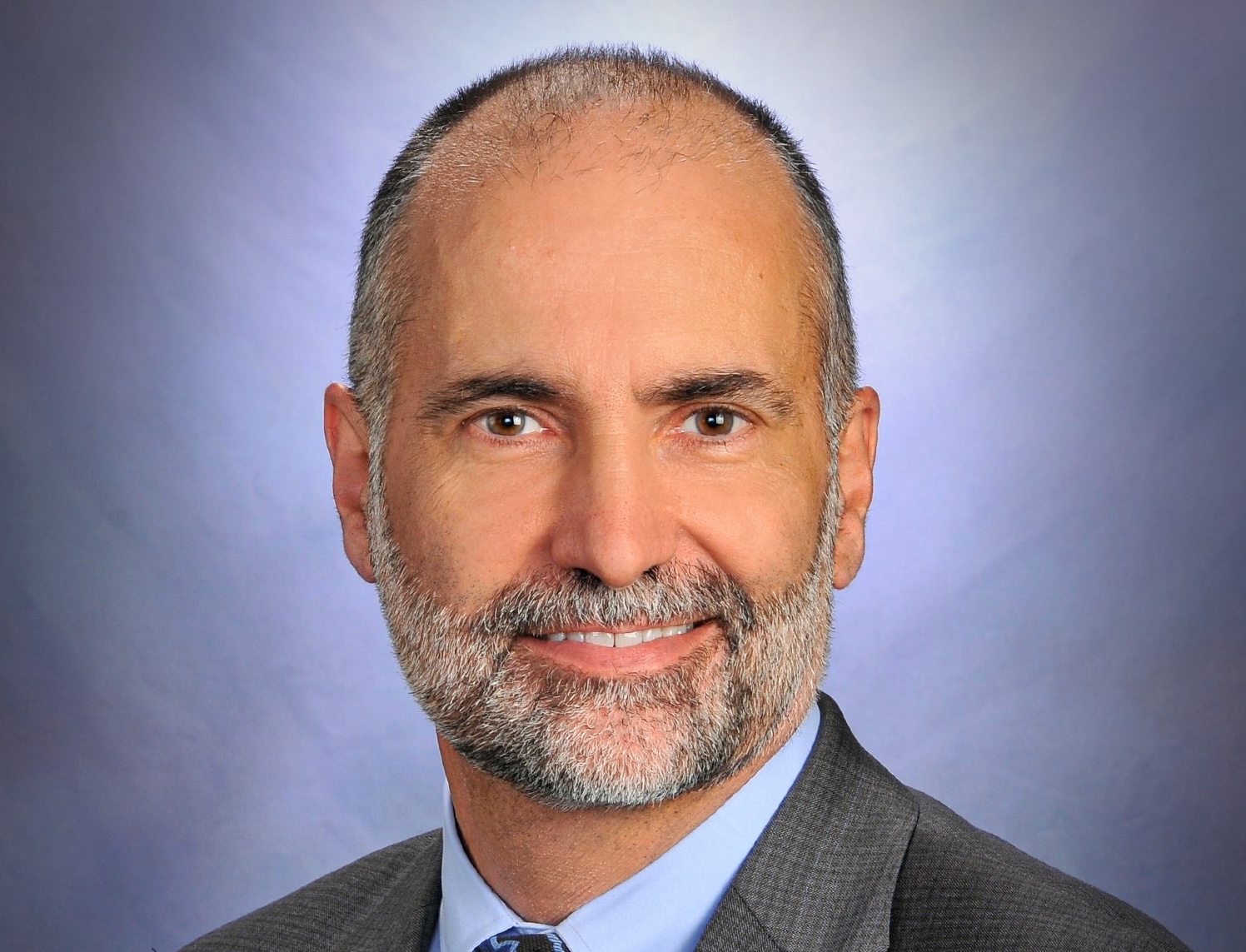
Dr. James “Jim” Souza’s career has been built on the intersection of medicine and communication. The skills required to care for critically ill patients and steer one of Idaho’s largest health systems through immense change were first honed at the University of Montana. A pulmonologist and critical care physician by training, he now serves as System Chief Physician Executive at St. Luke’s Health System in Boise, where he leads clinical strategy, quality and physician engagement across eight hospitals, hundreds of clinics and more than a thousand providers.
Souza grew up in Billings, the first in his family to complete college. His parents—his father a machinist, his mother a homemaker—encouraged his curiosity, but he largely charted his own path. In high school he fell in love with writing, journalism and the art of asking good questions, serving as editor of the school newspaper. When it came time for college, he chose the University of Montana because it had a strong journalism program and was the farthest in‑state option from Billings that he could afford.
Souza arrived in Missoula in 1984 and initially pursued journalism, focusing on print reporting and writing. A pivotal conversation with then–School of Journalism dean Charles Hood changed his trajectory. Hood was candid about the future of print journalism in the mid‑1980s—pointing to consolidations, closures and the rise of talking head television—and urged Souza to think carefully about long‑term prospects. The honesty prompted Souza to reconsider his path and pivot toward the sciences, eventually majoring in biology with an eye toward medicine, inspired in part by his own childhood experiences with asthma and close relationships with his pediatrician and allergist.
At UM, Souza discovered that he was not only capable of the rigorous pre‑medical curriculum—he thrived in it. He majored in cell biology, maintained near‑perfect grades and found strong mentors in faculty such as Dr. Galen Mell, who reassured him that his academic performance and communication skills could make him an excellent physician. He joined the Honors Society, played in the concert band and worked in the campus dining hall while also engaging in bench research in zoology professor Dr. Kerry Foresman’s lab, studying shrew ovaries and their evolutionary links. That research, combined with success on the Medical College Admission Test—including a pilot writing section that suited his love of language—solidified his confidence that medical school was within reach.
Souza graduated from UM in 1988 with a B.A. in cell biology and entered the University of Washington School of Medicine through the WWAMI program, which allows students from Washington, Wyoming, Alaska, Montana and Idaho to complete portions of their training close to home. He completed his first year of medical school in Bozeman, then moved to Seattle with his wife, whom he had met at UM in Aber Hall as a freshman. She, too, is a Montana native, from Cascade, and their shared plan at that point was to return to Montana after training.
Like many physicians, Souza’s specialty choice evolved over time. He initially thought he wanted to be a surgeon, but his surgical rotation felt too narrow and tedious hours of intense focus on a small operative field did not match his energy or interests. Facing another crisis of identity, he chose internal medicine because it offered broad possibilities and strong downstream options. A primary care track residency brought him back to Boise, where he cared for veterans at the Boise VA Medical Center and discovered that while he respected primary care, it wasn’t quite the right fit.
While in training, Souza met a pulmonary and critical care physician Dr. David Pierson, whose blend of technical mastery and compassionate communication imprinted on him. He admired the specialty’s mix of longitudinal relationships with patients who had chronic lung disease and high‑intensity work in the intensive care unit, where life‑and‑death decisions and complex ventilator management demanded both science and humanity. He completed a fellowship in pulmonary and critical care medicine through the University of Washington and the Boise VA, then returned to Boise in 1998 to practice.
As a clinician, Souza built a reputation as the physician families wanted at the bedside when someone was critically ill. He used his skills in empathetic conversations in moments with no easy answers. He led Idaho Pulmonary Associates, a regional group of pulmonary, critical care and sleep physicians, as president for nine years, growing the group from five to 17 providers, designing and building a multispecialty clinic, and implementing new income and governance models. He also helped lead the integration of his group into St. Luke’s Health System, taking on roles as site medical manager and Respiratory Therapy Medical Director.
Souza gradually shifted more of his time toward system leadership. He developed and sponsored major initiatives, including a hand‑hygiene improvement project that moved St. Luke’s from about 30 percent compliance to sustained rates above 90%, and he led the creation of a Telehealth Center in Boise. That center initially supported intensive care units and later expanded to tele‑nursing, tele‑hospitalist, tele‑pharmacist and tele‑sitter services, as well as hospital‑at‑home models that allow patients to receive acute care in their homes—an infrastructure that proved critical during the COVID‑19 pandemic.
Since 2021, Souza has served as System Chief Physician Executive at St. Luke’s, Idaho’s largest private employer, overseeing strategic growth, physician and advanced practice provider wellness and engagement, compensation models, leadership development, and clinical quality and safety. He co‑led the health system’s clinical response to COVID‑19, guiding surge planning, enterprise policies for testing, vaccination and patient flow, and serving as a public clinical spokesperson to communities, school boards and state leaders. Colleagues credit him with clear, non‑polarizing communication in a time of misinformation and with policy work—such as co‑authoring Idaho’s Crisis Standards of Care appeal—that directly shaped care across the state.
Souza has been widely recognized for his leadership and teaching. Honors include membership in Alpha Omega Alpha Medical Honor Society, Teacher of the Year for the Idaho WWAMI Program, Physician of the Year awards from the Idaho MGMA and Ada County Medical Society, and the Excellence in Medicine Award from the Idaho Hospital Association. Under his guidance, St. Luke’s earned the American Medical Association’s Joy in Medicine Silver Recognition for its physician wellbeing and engagement work.
Beyond St. Luke’s, Souza serves on the boards of the Idaho College of Osteopathic Medicine and the Idaho Coalition for Safe Healthcare, supports medical education and advocacy around the physician‑patient relationship, and has been a leader in community initiatives such as YMCA fundraising campaigns. UM campus houses so many landmark moments for him —meeting his wife, climbing the M, performing in concert band and doing bench research.
Souza’s advice is simple: it is okay not to be certain. The passion for writing, persuasion and listening that drew him to journalism never left; he simply applied those skills to a different vocation. Today, he uses them to coach physicians, guide patients and families, and help communities navigate complex health decisions.
“Roll with the punches and follow your arrow,” he said. These parts of you that are important, they will always be with you.”