2026 Distinguished Alumni Award Recipient: Dayna Swanson
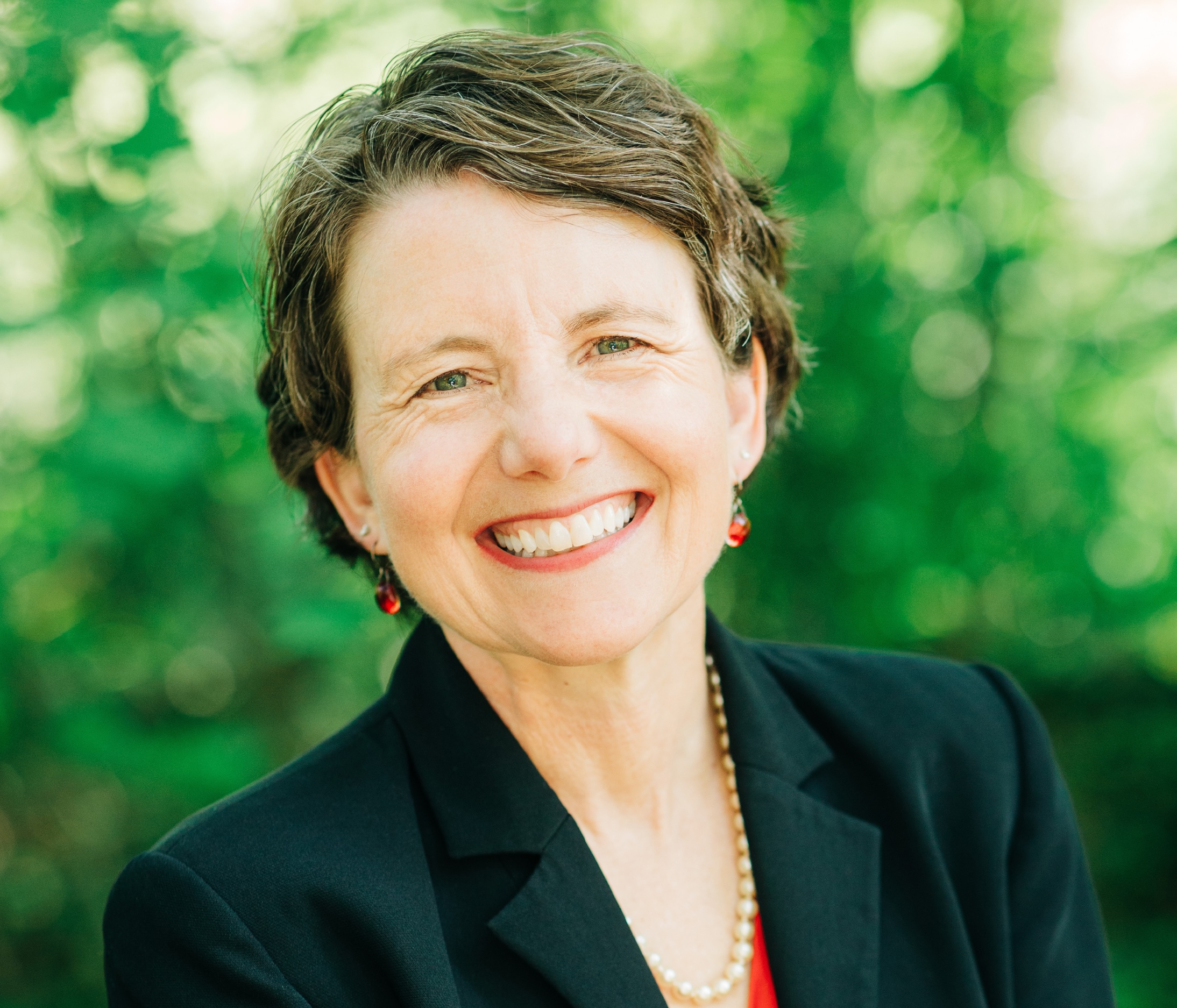
Dayna Swanson has built a life around the belief that public service is both a vocation and a responsibility. From her roots in Anaconda to leadership roles in the U.S. Senate, health care, and local government, she has devoted her career to strengthening communities, expanding access to public institutions and mentoring the next generation of women leaders who will carry that work forward.
Swanson grew up in Anaconda, Montana, the eldest of four children in a family where politics and public affairs were common topics at the dinner table. Her father, Raymond “Butch” Swanson, was a public school teacher; her mother, Kathy Swanson, stayed home with the children before working at the local credit union and becoming head teller, and went on to serve in the Montana State Legislature for four terms. When the smelter closed and Anaconda faced economic upheaval, the community responded with resilience and solidarity. Swanson credits that place and those people with shaping her work ethic, loyalty to friends and instinct to “roll up her sleeves” and lend a hand without judgment when families and individuals need support.
After graduating from Anaconda High School, Swanson enrolled at the University of Montana, where she earned her Bachelor of Arts in Political Science with a minor in Communication Studies in 1993. On campus, she joined Spurs, Sigma Alpha Epsilon Mu and the Honors Program, and she found herself drawn to public administration and the mechanics of government. Wanting to deepen that focus, she remained at UM for graduate school, entering the Master of Public Administration program and graduating in 1995.
The MPA program was formative. Swanson was one of the few women in the program at the time, and there were no female professors in the department. She loved the classes—covering topics such as budgeting, personnel and public-sector management—and sought out women mentors, including Communication Studies professor Betsy Bach, whom she requested as a member of her thesis committee. The experience anchored her commitment to public service and gave her a framework for understanding government not as abstraction, but as a tool for improving communities.
Swanson’s early career included work in the private sector, but the defining chapter began when then–State Senator Jon Tester decided to run for the U.S. Senate in 2006. Swanson worked on the campaign, helped Tester defeat incumbent Senator Conrad Burns and, after the election, joined his staff as deputy state director, one of the “lucky ones” who could remain in Montana. Her portfolio centered on constituent services—Tester’s top priority—and she set about designing high-quality processes to ensure that every constituent who walked into an office, wrote a letter, sent an email or called the phone line received a response, regardless of geography or political stances.
Over the next dozen years, Swanson rose through the ranks, eventually serving as Tester’s state director and overseeing eight offices across Montana—Glendive, Billings, Bozeman, Great Falls, Butte, Missoula and Kalispell. She led a team of about 18 staff members, processing more than 1,000 constituent cases per year, and helped build a constituent services model so effective that other U.S. Senate offices reached out to learn from it. Tester later honored her work with a tribute on the U.S. Senate floor, placing her contributions into the Congressional Record as an example of responsive, citizen-centered government.
Swanson describes herself as a “proud public servant,” and she rejects the misconception that public servants are not working for the public good. For her, public service has always meant listening to thousands of Montanans, hearing their stories and trying to help—whether in meetings with veterans struggling to access earned benefits, discussions with tribal nations about both challenges and opportunities, or conversations with families caught in bureaucratic delays. Her drive, she says, stems from both her UM training in public administration and her parents’ example: a public school teacher and, later, a legislator whose work shaped lives far beyond their own household.
After 12 years in Tester’s office, Swanson and her partner, Denise Juneau—herself a UM law graduate and a public servant who would become superintendent of Seattle Public Schools—moved to Seattle. Swanson became director of government relations for the Seattle Cancer Care Alliance, leading public policy and government affairs strategy at the federal, state and local levels during the COVID‑19 pandemic. She oversaw the organization’s Community Benefit program, including a federally required community health needs assessment and implementation strategy, and helped organize one of the country’s first vaccine clinics, setting it up in just 19 days and creating efficient processes that brought relief and joy to cancer patients and their families.
In 2021, Swanson returned to Montana as system director of governance for Bozeman Health, a community health system with two hospitals, a network of clinics, and thousands of employees. She served as liaison to the system board, CEO and executive team, helping the organization navigate financial challenges, workforce reductions, a vote of no confidence by physicians and the subsequent resignation of its CEO and board chair. She worked closely with an external auditor who interviewed more than 300 employees, and she helped guide the board through governance reforms and the hiring of a new CEO, bringing calm and structure to a turbulent moment.
Throughout her career, Swanson has invested heavily in her communities. In Missoula, she served as a program facilitator for Parks and Recreation while completing her degree, and later as a volunteer board member, helping develop and adopt a master park plan and supporting efforts that led to projects such as Fort Missoula Regional Park and county-wide trails. She has been a frequent volunteer, from timing road races to guiding campaigns for park referenda, and she continues to engage in neighborhood councils and local initiatives, believing that “all politics is local” and that strong schools, parks and universities are the foundation of a strong community.
Swanson is also a tireless advocate for women in leadership. She has served on the planning committee for the New Leadership Conference through the Mansfield Center, helped establish MT New Leadership to bring undergraduate women together to study politics, and worked with the UM Public Service Academy to present on women’s strengths and barriers in public-sector leadership roles. She has developed curricula and spoken to cohorts of bipartisan women, including at the Campaign School at Yale University, encouraging them to run for office, start businesses and bring their voices into decision-making spaces.
Now back in Missoula—where she and Juneau live—Swanson continues to give back to UM as a long‑time member of the MPA Alumni Council, advising on recruitment, retention and programming, mentoring students and helping keep the program visible and strong. She also continues her work as a strategist by helping organizations meet the moment on social impact movements. She remains an active Griz fan, part of the Whitebear Society tailgating group, and she has been recognized by the University as the recipient of the 2026 UM Master of Public Administration Distinguished Alumni Award.
In every role, Swanson has favored substance over spotlight. She is the strategist behind vaccine clinics and governance reforms, the steady voice in rooms often dominated by men and the mentor urging students and colleagues to see public service to put others first. For the countless Montanans who have benefited from better parks, responsive government offices, health-care reforms or a well-timed helping hand, her work has shaped their lives.